
One awkward step is all it takes to roll an ankle. Whether you twist it on the pickleball court, catch a root on the trail or simply miss the last stair, one minute you’re on the move, and the next you’re wondering: Do I walk it off, ice it or get it checked out?
While many ankle sprains can be treated at home, some need prompt medical attention.
Knowing how to tell the difference can help you recover safely and keep you in the game.
What is a rolled ankle, and why is it so common?
A “rolled ankle” is the common term for an ankle sprain. It happens when the ligaments that support your ankle stretch too far or tear after the foot twists or rolls unexpectedly.
Most sprains occur when the foot rolls inward, damaging the ligaments on the outside of the ankle. Because your ankles support your body weight with every step, they’re especially vulnerable during activities like:
- Walking or running on uneven surfaces
- Hiking
- Sports that involve jumping or quick changes in direction, such as basketball, soccer, football, tennis or pickleball
- Slipping or missing a step
- Wearing shoes that don’t provide enough support, traction or cushioning
Ankle sprains are one of the most common musculoskeletal injuries, with around 2 million cases each year in the U.S. Adolescents and young adults (ages 10-24) account for more than half of all sprains.
Fortunately, most sprains are mild and heal well with the right care. But in some cases, they can result in significant ligament damage that makes walking difficult and requires medical attention.
How do I know if I rolled my ankle or injured it more seriously?
Many symptoms overlap, so it isn’t always easy to tell the difference at home.
Signs of a typical ankle sprain include:
- Pain around the ankle
- Swelling
- Bruising
- Tenderness
- Difficulty putting weight on the foot
However, a fracture or more serious injury may be more likely if you:
- Have severe pain immediately after the injury
- There is obvious deformity
- Can’t bear weight for several steps
- Have pain directly over the ankle bones
- Have numbness or changes in skin color
A broken bone can sometimes feel surprisingly similar to a sprain. That’s why medical evaluation and, if needed, an X-ray can help determine the cause of your symptoms.
What can I do at home to treat a rolled ankle?
Many mild ankle sprains can be treated at home during the first few days after the injury. The goal is to protect your ankle, manage swelling and gradually return to normal movement as symptoms improve.
To help your ankle heal:
- Protect the ankle. Avoid activities that cause significant pain, but don't stay completely inactive longer than necessary.
- Use compression. An elastic bandage or ankle brace can help reduce swelling and provide support.
- Elevate your foot. Keep your ankle raised above the level of your heart whenever possible to help minimize swelling.
- Ice, if it helps. Apply an ice pack for 15 to 20 minutes at a time to ease pain and swelling during the first day or two. Wrap ice in a thin towel or cloth to protect skin.
- Begin gentle movement when you're able. As your pain improves, gradually begin moving and putting weight on your ankle as tolerated.
Did you know? Having one ankle sprain increases your risk of another.
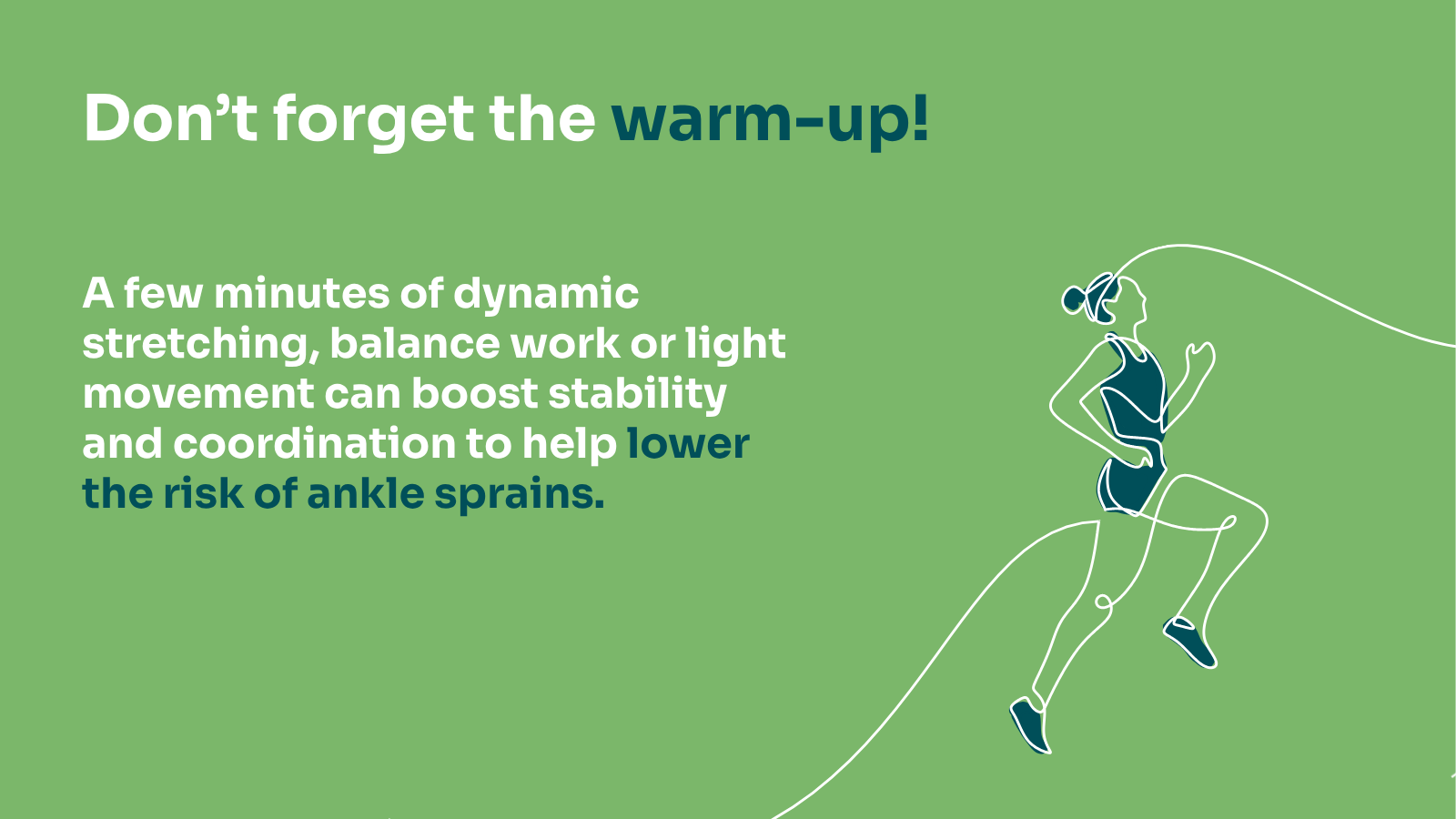
Strengthening the muscles around your ankle and gradually returning to activity can help improve stability and reduce your chances of reinjury. If you experience repeated ankle sprains, talk with a health care clinician about rehabilitation or physical therapy.
When should I go to urgent care for a rolled ankle?
Most rolled ankles can be managed at home, but some injuries need medical evaluation to rule out a fracture or more serious ligament damage. Urgent care is often the right choice when your injury needs prompt evaluation but isn’t life-threatening.
Consider visiting urgent care if:
- You can’t walk or bear weight on your ankle
- Swelling or bruising is severe
- Your pain is getting worse instead of improving
- You heard or felt a “pop” when the injury occurred
- The ankle looks deformed
- You have numbness or tingling, or your foot feels cold
- Symptoms haven’t improved after several days of home care
How does urgent care treat ankle injuries?
At urgent care, a clinician will examine your ankle and determine whether an X-ray is needed to rule out a fracture or other injury.
If a sprain is diagnosed, treatment may include:
- A brace, splint or walking boot to stabilize the joint
- Compression and elevation guidance
- Crutches to reduce weight-bearing
- Pain management recommendations
- A plan for safe return to activity
- Referral to an orthopedic specialist or physical therapy, if needed
Getting evaluated early can help prevent long-term complications like chronic instability or repeated sprains.
When will my rolled ankle heal?
Recovery from an ankle roll depends on the severity of the injury.
- A mild ankle sprain may improve within one to three weeks.
- Moderate sprains often take three to six weeks to heal.
- Severe sprains involving torn ligaments can require several months of recovery and rehabilitation.
Even if your ankle starts to feel better after a few days, it’s important to avoid returning to sports or strenuous activity too soon. Doing so can increase your risk of reinjury or chronic ankle instability.
When should I go to the emergency room instead?
Most minor ankle injuries can be evaluated at urgent care, but sometimes an injury is more than a sprain. Go to the emergency department or call 911 if you have:
- An open wound with exposed bone
- Heavy or uncontrolled bleeding
- An ankle that is severely deformed after a major injury
- Loss of feeling or circulation in your foot (such as a cold, pale or blue foot)
- A serious injury caused by a high-impact event, such as a car crash or a significant fall
Get back on your feet at Indigo Urgent Care
Whether your injury happens on the court, on the trail or simply walking down the stairs, Indigo Urgent Care is here to help with fast, convenient care close to home.
Our clinicians can evaluate your ankle injury, recommend the right treatment plan and help you recover safely. Every one of our 50+ Indigo locations has on-site digital X-ray, and if you need crutches or a brace to support your recovery, we’ll make sure you leave with the right equipment. If your injury requires a higher level of care, we can also connect you with a specialist.
We’re here from 8 a.m. to 8 p.m., seven days a week, so you can get the care you need – when you need it.
