
Stings happen – especially in the summer, when you’re hitting the trail, tending the garden or relaxing on the deck.
Most of the time, a bee sting is a minor summer inconvenience – a bit of pain, a little redness, and swelling that fades in a day or two. But for some people, a sting can trigger a more serious allergic reaction.
As busy pollinators take to the skies this summer, it’s important to know the difference between a normal reaction and a bee sting allergy.
How do I know if I’m allergic to bee stings?
After a bee sting, some pain and swelling are completely normal. In fact, most people will experience:
- Sharp pain at the sting site
- Redness
- Mild swelling
- Itching around the area
These symptoms usually stay localized and improve within a few hours to a couple of days.
A bee sting allergy happens when the immune system overreacts to the venom. Instead of a local reaction, symptoms may affect other parts of the body – and can show up within minutes.
Every sting is different
You may not respond the same way every time you’re stung. Just because you had a mild reaction in the past doesn’t guarantee future stings will be mild.
What are the signs of a serious bee sting reaction?
Most bee stings are more nuisance than emergency. But a severe allergic reaction – called anaphylaxis – is a medical emergency. It can happen quickly, and symptoms may include:
- Hives or itching beyond the sting site
- Swelling of the face, lips, tongue or throat
- Wheezing or trouble breathing
- Tightness in the chest or throat
- Dizziness or fainting
- Nausea, vomiting or stomach cramps
- Rapid or weak pulse
If these symptoms develop after a bee sting, call 911 right away.
Even if symptoms improve, it’s still important to seek emergency care. Allergic reactions can return or worsen after the initial response.
A bee sting can also be dangerous even when it isn’t causing a severe allergic reaction.
You should seek medical attention if:
- You’re stung multiple times
- The sting is in the mouth or throat
- Swelling continues to worsen after 24-48 hours
- Signs of infection appear (increasing redness, warmth, pus or fever)
Big swelling doesn’t automatically = allergy
Some people develop large local reactions that look dramatic but aren’t considered severe allergic reactions. Symptoms that affect breathing, the throat or multiple parts of the body are generally more concerning than swelling alone.
What should I do after a bee sting?
If you have a known bee sting allergy, you should always carry an epinephrine self-injector with you. If you do get stung, use your injector and call 911.
If you get stung and don’t think you are allergic, don’t wing it. A few simple steps can help reduce discomfort and lower the risk of complications:
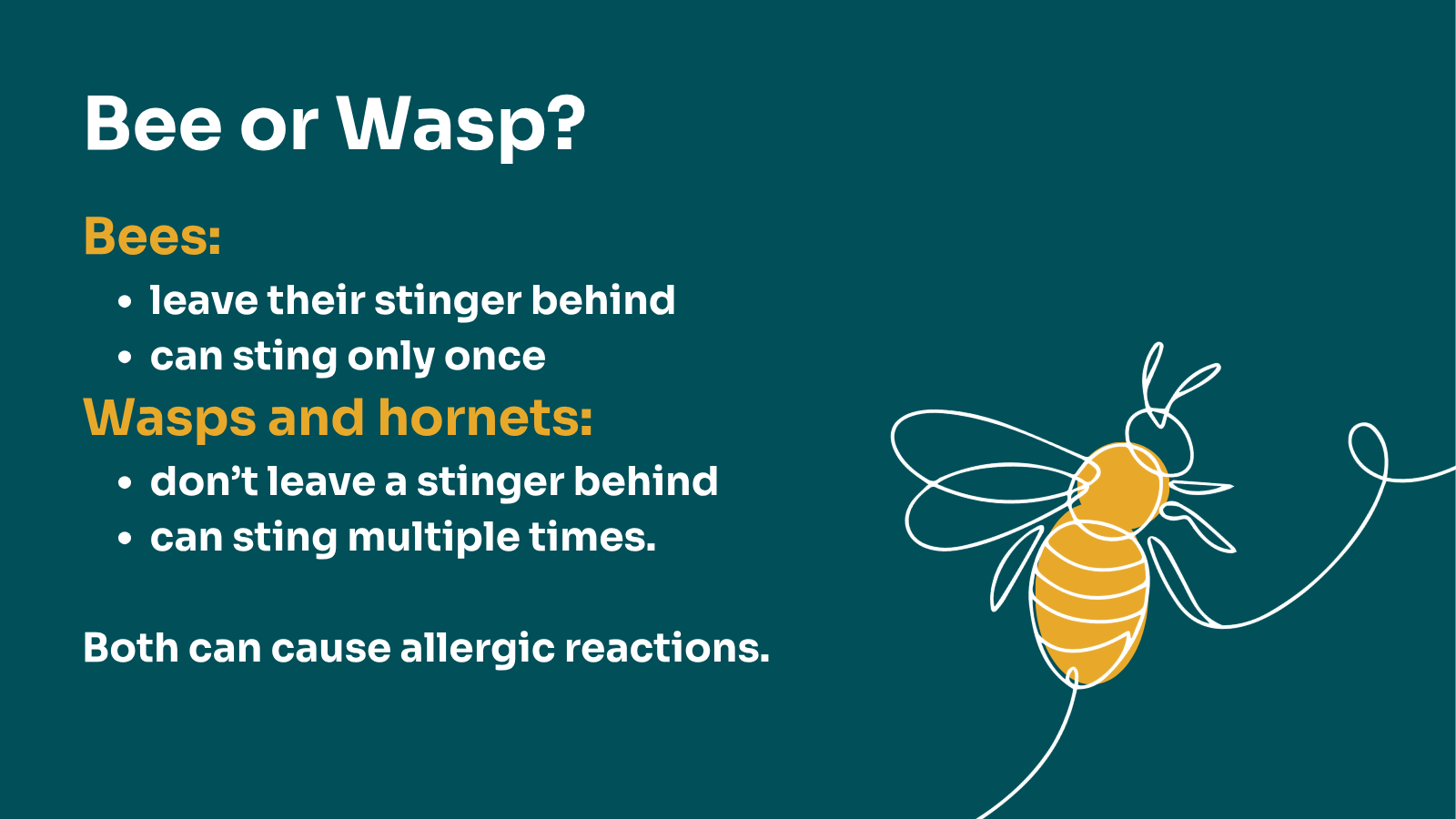
- Remove the stinger as quickly as possible if it’s still in the skin. Scrape it out gently with a fingernail or credit card – and avoid squeezing, which can force venom deeper into the skin and increase pain or swelling.
- Wash the area with soap and water.
- Apply a cold compress for 10-15 minutes at a time. Always wrap ice in a thin cloth or towel to help prevent skin damage.
- Use an over-the-counter antihistamine or pain reliever if needed.
- Watch the area for changes over the next several hours.
Resist scratching the sting site, even though it may be itchy. That can make swelling worse and increase the risk of infection.
When should I seek care for a bee sting?
Most bee stings can be treated at home, but some reactions deserve a closer look from a medical professional.
You should visit urgent care if:
- Swelling is severe or continues to spread
- Symptoms aren’t improving after a couple of days
- You’re unsure whether a reaction is normal or allergic
- You develop widespread itching or hives without breathing symptoms
Seek emergency care or call 911 immediately if you experience any signs of anaphylaxis, including trouble breathing, swelling of the face, lips, tongue or throat, or dizziness and fainting.
When in doubt, get checked out at Indigo
When it comes to bee stings, it’s always better to err on the side of caution. If you’re experiencing significant swelling, worsening symptoms or you’re simply not sure whether your reaction is normal, Indigo Urgent Care can help you figure out what’s going on – and take some of the sting out of the uncertainty.
You don’t need to wait to get answers or relief. Walk into any Indigo location, book a same-day or next-day appointment online or connect through Indigo Virtual Care. We’re here every day from 8 a.m. to 8 p.m., both in person and virtually.
